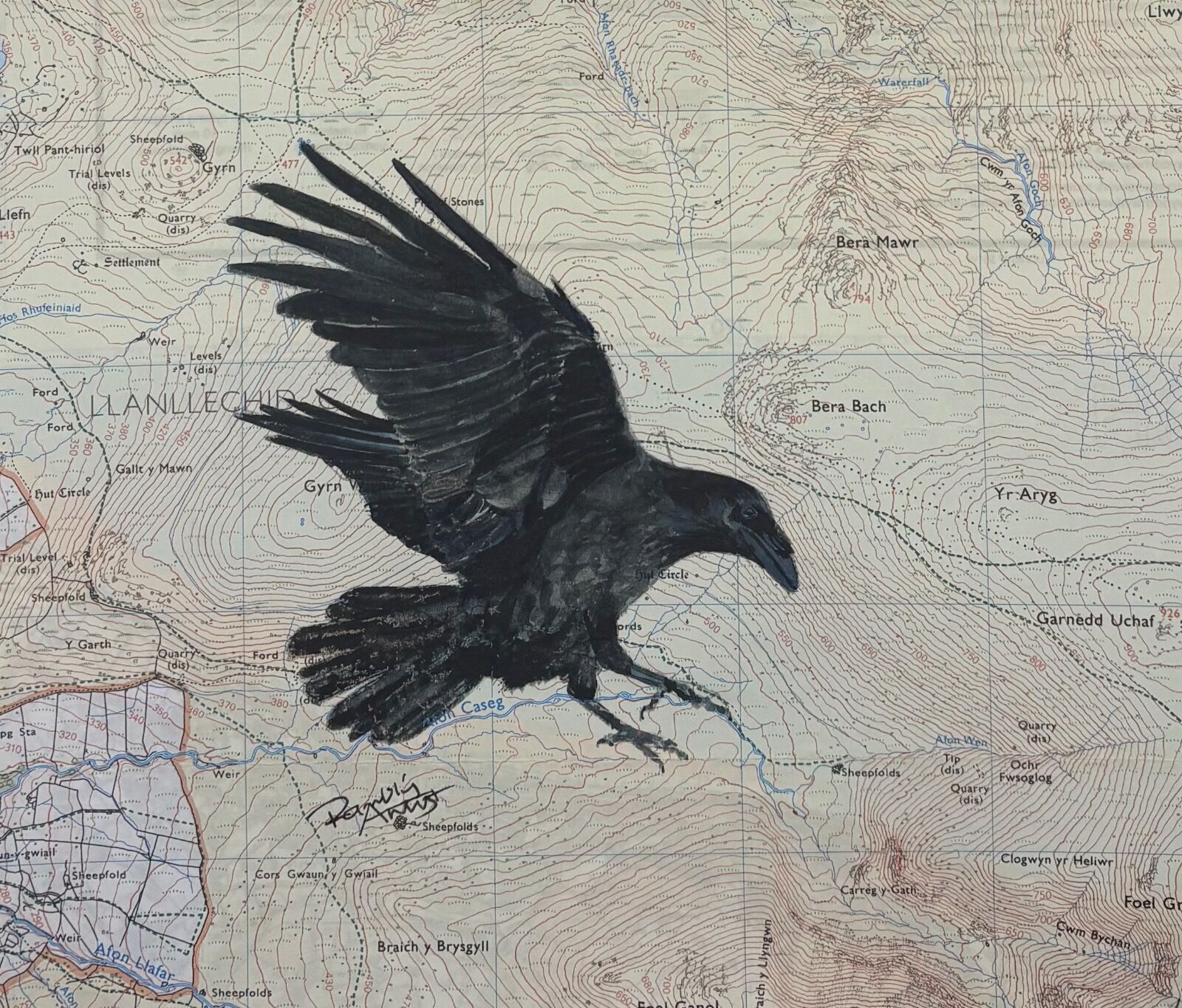
I love to see ravens soaring high above the peaks, calling to one another with their deep “cronking” voices, and performing their aerial acrobatics, rolling, diving and chasing each other. They are a joy to watch and look perfectly at home in these wild landscapes.
In mountain ecosystems, ravens play an important role as opportunistic feeders and scavengers, helping to recycle nutrients back into the environment. They are incredibly adaptable, living across a wide range of habitats from wild mountains and coastal cliffs to forests and open moorland.
Ravens are members of the crow family and have one of the largest brains of any bird. They are known for their problem-solving skills, curiosity and memory and can recognise individual people, learn from experience, and adapt to new situations.
They are also highly social birds. Ravens communicate with a wide range of calls, gestures and body movements, and pairs often stay together for life. Their famous aerial displays help strengthen bonds and communicate with other ravens.
This watercolour of a raven is from a photo taken by Gary when we were out walking in Eryri and is painted on a OS map of the area.
Raven in flight 8x8" £75
plus postage
TO PURCHASE CLICK HERE


